

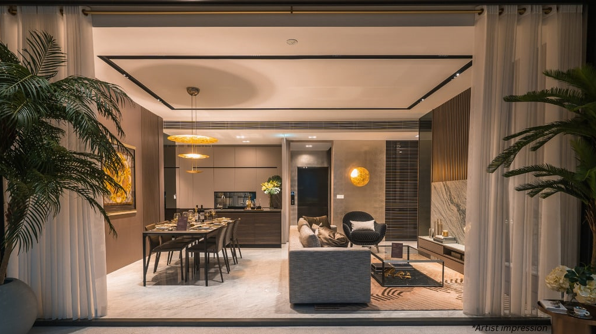
In Singapore’s residential property market, buyers rarely decide with spreadsheets alone. While price per square foot, unit size, and location matter, many purchase decisions are shaped by what buyers feel during viewings. The showflat experience lighting, layout flow, perceived privacy, and emotional “fit” often creates the first internal decision, and the logical evaluation comes later to justify it.
Developments like Narra Residences and River Modern help illustrate how different residential planning approaches can trigger different psychological responses. One may appeal to buyers who crave calm, stability, and long-term comfort; the other may attract buyers who value efficiency, lifestyle convenience, and modern urban rhythm.
Emotional First, Logic Second
Most buyers walk into a unit and feel an immediate reaction: “This feels right” or “Something feels off.” This happens before they calculate affordability or compare competing projects. The emotional response is shaped by subtle signals, including:

- Sense of space and openness (even if the unit is compact)
- Natural light and comfort
- Layout clarity (intuitive movement from entrance to living to bedrooms)
- Perceived privacy and quietness
- Design harmony that feels “easy to live in”
Once that emotional positive response exists, buyers begin collecting rational reasons to support it location, transport convenience, nearby amenities, or perceived long-term value.
The Power of Visualization
Buyer psychology intensifies when the home allows the buyer to visualize life inside it. The moment a buyer can picture morning routines, family dinners, hosting guests, or working from home, the decision becomes emotionally anchored.
This is where developments like Narra Residences often appeal to stability-oriented buyers. If a layout feels adaptable supporting different life stages buyers experience reassurance. That reassurance becomes a form of emotional security: “This home will still work for me later.”
On the other hand, River Modern can appeal strongly to buyers who visualize convenience-based daily routines: efficient commuting, easy access to amenities, and a low-friction lifestyle. For this buyer segment, the emotional satisfaction comes from imagining smoother days and reduced time waste.
The “Comfort Signal” in Residential Design
Comfort is a psychological trigger. In a mature and competitive market like Singapore, buyers are sensitive to design that feels “residential” rather than “temporary.” They often respond positively to environments that feel calmer and more liveable, even if they cannot explain why.
Narra Residences tends to align with this comfort-driven psychology because buyers seeking long-term living generally prioritize usability, balanced proportions, and a sense of personal space. When a buyer feels that the home will remain comfortable over many years, emotional confidence increases.
The “Efficiency Signal” in Urban Buyer Decisions
In contrast, efficiency is also a psychological comfort. Buyers who value flexibility professionals, investors, or lifestyle-driven purchasers often associate efficiency with safety. The logic is emotional at its root: if the property feels easy to live in and easy to maintain, it feels like a low-risk decision.
This mindset aligns with River Modern, where convenience-focused buyers may be drawn to functional routines and urban accessibility. The emotional reassurance comes from imagining a home that supports fast-paced living without friction.
Why the First Impression Matters
First impressions create commitment bias. Once buyers emotionally “like” a property, they interpret details through a supportive lens. If they emotionally connect with the calm residential character of Narra Residences, they will often rank its features more positively. If they emotionally connect with the efficiency and lifestyle fit of River Modern, they will justify it as the smarter choice.
Conclusion
The showflat experience is not just presentation it is psychological framing. Buyers choose homes that feel aligned with identity, daily rhythm, and future security. Narra Residences and River Modern represent how different design priorities can appeal to different buyer mindsets. In Singapore’s market, the “best” project is often the one that creates emotional comfort first, then passes logical validation afterward.