

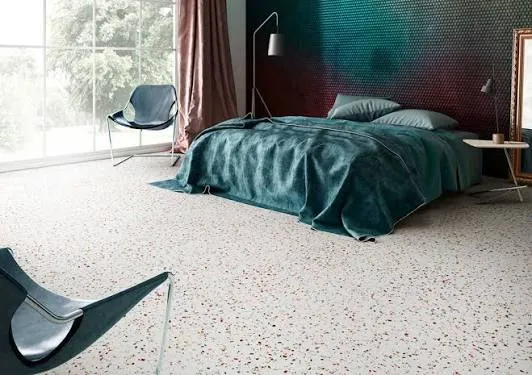
Terrazzo has graced train stations, banks, and grand lobbies for generations, prized for its speckled elegance and long life. Today, terrazzo flooring comes in both traditional cement-based and resin-based forms, and the second option has opened the look to far more buildings. This article explains how the styles differ and where each one belongs.
A Short History of the Look
The idea began with craftsmen reusing marble offcuts, setting them in mortar and polishing the surface smooth. The result was durable, decorative, and economical. Over time, the technique spread worldwide and became a signature of public architecture.
Modern designers have revived it with fresh palettes and larger chips. What was once associated with old civic buildings now appears in cafes, studios, and homes. The appeal is timeless, combining pattern with practicality.
Cement-Based Versus Resin-Based
Traditional terrazzo is poured thick, cured for days, then ground and polished. It is heavy, requires structural consideration, and takes time. Its depth allows many regrinds over a long life.
Resin systems use polymer binders instead of cement. They are thinner, lighter, and faster to install, with brighter colour possibilities. Joints can be reduced or eliminated, which gives a smoother, more continuous appearance.
Aggregates and Colour Design
Chips of marble, glass, quartz, and even recycled materials create varied character. Larger pieces feel dramatic, while fine aggregates look subtle and refined. Mixing sizes adds depth and rhythm.
Colour planning matters. A neutral base lets chips stand out, while a dark base makes pale aggregates sparkle. Brass strips can divide patterns into zones, adding graphic lines and flexibility to the layout.
Where the Style Works Best
Lobbies, retail spaces, schools, and healthcare facilities benefit from the durability and cleanability. Kitchens and bathrooms suit resin versions because of their sealed, seamless finish.
Consider the building structure. Heavy traditional systems may not suit upper floors without engineering review. Lightweight resin alternatives are usually easier for renovations and existing buildings.
Care and Longevity
Terrazzo is tough but not indestructible. Use pH-neutral cleaners, soft mops, and entrance mats to reduce grit. Acidic substances can dull polished surfaces, so wipe spills promptly.
Periodic polishing or resealing refreshes the finish. Resin versions may need a new topcoat after many years of heavy traffic. Keep maintenance records and use recommended products for consistent results.
Extending the Design Outdoors
Exterior areas can share a similar aesthetic using durable coatings. A well-chosen driveway coating can bring a consistent look from entrance to garage, with texture and UV resistance suited to open air. Matching colours indoors and out ties the property together.
Outdoor surfaces face weather, so check temperature ratings and grip. Slip-resistant finishes are important near steps and slopes. Plan drainage so water does not sit on the surface, which prolongs the life of any finish.
Budget and Planning
Costs depend on materials, thickness, and complexity. Custom patterns and metal dividers raise the price, while simple layouts remain economical. Request samples and itemized quotes so comparisons are clear.
Allow time for preparation and curing, particularly for traditional pours. Early planning with designers and builders avoids conflicts with other trades and protects the finished surface during construction.
Conclusion
Terrazzo-style floors blend heritage with modern performance. Understand the difference between cement and resin systems, plan colours and aggregates thoughtfully, and keep up with gentle maintenance. The result is a distinctive surface that works hard and looks refined.
To explore finishes and discuss your own plans, visit quickfxepoxy.ca and connect with the team.