

Table of Contents
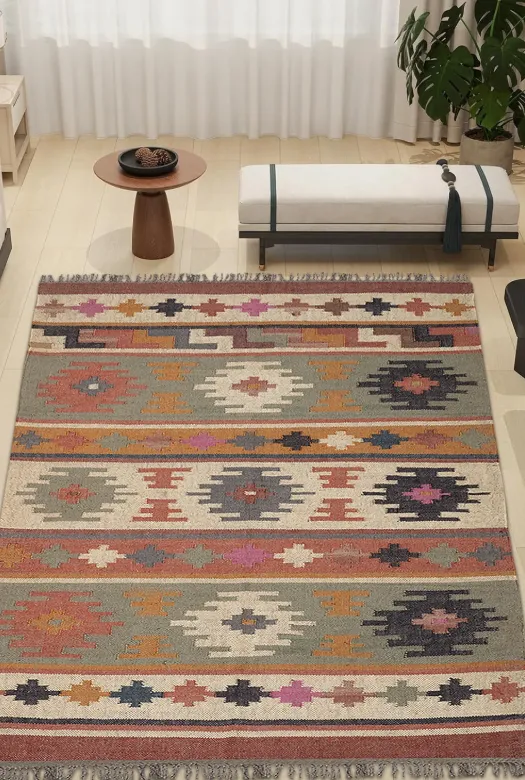
The standard advice for buying bedroom rugs is almost always the same: buy a large rug, slide it under the bed, make sure it extends on both sides, and enjoy your hotel-style bedroom.
Nice advice. But it does not work for every Indian bedroom. In a compact apartment bedroom, you may have a king-size bed, a wardrobe that opens directly towards it, and barely enough walking space around the sides. A large rug can end up hidden under the bed, pushed against furniture, and impossible to clean properly.
So here is the opinion most bedroom rug guides miss: You do not need a large rug just because you have a large bed. You need softness and visual balance where the bedroom is actually used.

That could mean one large handmade rug. But it could also mean two side rugs, one long runner, or a smaller rug placed exactly where your feet land. The right bedroom rug depends less on how expensive or impressive it looks and more on one practical question:
Where do you actually move when you are inside the bedroom?
Do You Actually Need a Large Rug Under Your Bed?
No. A large bedroom rug is only worth buying when enough of it remains visible and useful around the bed. This is the part buyers rarely hear before purchasing.
A handmade rug placed under a bed can create a beautiful, grounded look. But if 70% of the rug is hidden under the bed and the remaining edges are blocked by wardrobes or furniture, you are paying for a lot of area rug that nobody sees or uses.
That is not luxury. That is poor planning.
A large bedroom rug makes sense when:
- The bed is positioned centrally.
- There is walking space on both sides.
- The rug can extend beyond the foot of the bed.
- You want to visually connect the entire sleeping area.
- The room is large enough for the rug to remain visible.
A large rug may not make sense when:
- The bed is pushed against one wall.
- The bedroom is narrow.
- Wardrobe doors open into the rug area.
- You only use one side of the bed for daily movement.
- Most of the rug will remain permanently hidden.
Current bedroom rug interior & decor landscape increasingly includes runners and alternative placements alongside large under-bed rugs, particularly for smaller or awkward layouts. IKEA, for example, recommends runners around the bed as a practical option that provides comfort underfoot while making cleaning easier.
Key note: Do not measure your bedroom first. Measure the usable floor around your bed.
That is the space your rug actually needs to serve.
Are Two Small Bedroom Rugs Better Than One Large Rug?
For many Indian bedrooms, yes. Two smaller rugs can be more practical than one oversized rug when the bed has limited space around it. This is particularly useful in apartment bedrooms where the bed is the dominant piece of furniture, and the remaining floor is divided into narrow walking areas.
Two side rugs give you softness where you need it without forcing a large carpet under furniture.
Two rugs work especially well when:
- You and your partner get out of bed from different sides.
- The room is narrow.
- The bed is placed centrally, but there is little space at the foot.
- You want to clean or move the rugs easily.
- You want a lighter, less covered look.
One large rug is usually better when:
- The bedroom has generous floor space.
- You want the bed to feel visually anchored.
- The floor is a major visual feature in the room.
- You want a single handmade piece to define the space.
There is also a middle option: one long bedroom runner on the open side of the bed.
This can work better than two small rugs when one side of the bed is against a wall, and only one side is used as the main walking route. The right number of bedroom rugs is not about symmetry. It is about where people actually walk. That may sound less decorative, but it produces a far more functional room.
Should Bedroom Rugs Be Soft or Easy to Maintain?
Ideally both, but if you have to compromise, choose the level of softness you can realistically maintain. This is where the bedroom rug category often gets oversimplified.
People assume a bedroom means maximum softness, so they immediately look for thick, fluffy, or shaggy hand knotted rugs. But an extremely high-pile rug is not always the most comfortable choice to own in the long run.
It can collect dust more easily, require deeper cleaning, and become difficult to manage under heavy furniture.
Choose a softer, deeper pile if:
- You spend a lot of time barefoot.
- You want a visibly plush bedroom.
- The room has relatively low foot traffic.
- You are comfortable with more regular cleaning.
Choose a low or medium pile if:
- Dust is a major concern.
- You want easier vacuuming.
- The rug will sit under a storage bed.
- You regularly move furniture.
- You want handmade texture without excessive thickness.
A flatwoven or lower-pile rug can also be particularly useful around beds with storage access. Flatter rugs can make it easier to use under-bed storage, while anti-slip underlays help keep rugs stable.
A bedroom rug should feel good when you step on it. It does not need to feel like a cloud you cannot maintain. Medium pile is often the more sensible choice for everyday Indian homes. You still get comfort and warmth without creating a high-maintenance dust trap.
Key note: “Soft” should describe how the rug feels under your feet, not how much work it creates for you.
Can a Handmade Rug Make a Small Bedroom Look Bigger?
Yes, but only when the carpet follows the shape and movement of the room instead of interrupting it. A handmade carpet can make a compact bedroom feel more organised. But the wrong rug can create the opposite effect.
The common mistake is placing a small decorative rug randomly in front of the bed because there is empty floor there. The rug may be beautiful, but if it has no relationship with the bed or walking area, it can make the room feel more fragmented.
To make a smaller bedroom feel more balanced:
- Choose one clear rug zone instead of several unrelated rugs.
- Use a shape that follows the room’s movement.
- Avoid extremely busy patterns across the entire floor.
- Leave some flooring visible around the rug.
- Focus the rug where you enter or leave the bed.
If the bedroom is long and narrow
A runner may work better than a wide rectangular rug. It can follow the main walking route and add softness without visually cutting the room in half.
If the bedroom is visually plain
A rug can introduce texture through:
- Handwoven surfaces.
- Subtle pile variation.
- Tonal patterns.
- Natural fibres.
- Low-contrast colour changes.
You do not always need a bold design to make the bedroom more interesting. Sometimes the room needs texture, not another colour.
A small bedroom does not automatically need a small rug. It needs a rug that does not interrupt the way the room is used.
Where Do Bedroom Rugs Actually Make the Biggest Difference?
Bedroom rugs make the biggest difference in the places your body notices before your eyes do. This is why the first step out of bed matters more than the centre of the room.
Think about your morning.
You wake up, put your feet down, walk towards the wardrobe, perhaps sit near the foot of the bed or cross the room towards the bathroom.
Those movement zones are where a rug earns its place.
The most useful bedroom rug positions are:
Beside the bed: Best when your priority is comfort underfoot.
Under the lower part of the bed: Best when you want comfort and a visually grounded layout.
At the foot of the bed: Useful for adding a defined transition between the bed and the rest of the room.
Along the main walking route: Ideal for narrow rooms or beds placed against a wall.
Under a reading chair or bedroom bench: Useful when the bedroom has a separate seating zone.
The current trend towards runners and more flexible bedroom rug layouts reflects this shift away from treating one large under-bed rug as the only correct answer.
For people exploring handmade options across different layouts, Kesari Home offers bedroom rugs in varied sizes and constructions, which is useful because not every bedroom needs the same oversized rectangular rug.